
"Gold Cup Theory"
200 article(s) found

The main points you must know as a barista introduce the necessary knowledge to be a qualified barista
The proportion of SCAA fine cup coffee defined by the Gold Cup Fine Coffee Association of the United States and the scae European Fine Coffee Association must be about 20% of the coffee extraction rate, while the TDS is about 1.1% to 1.3%. For Drip Filter dripping and brewing, how to extract the best coffee flavor is controlled by two variables: the extract of coffee powder and the concentration in a cup of coffee.

What is the best proportion of hand-brewed coffee powder? How much water does it take to make 20 grams of coffee powder?
Most of the time, we rely on the golden cup theory when making coffee, that is, under certain circumstances, we can understand the relationship between the ratio of powder to water and concentration and extraction rate. As a result, the reasonable proportion of powder and water needed to make coffee is deduced. Powder water ratio what is the appropriate proportion of hand powder water? 1:15 is believed to be the most common answer. The pink-water ratio at 1:15 seems to exist as if it were true. There is a lot of hand rush in the front street.

What is Coffee Extract? How to judge under-extraction/over-extraction flavor performance of hand-brewed coffee
"Under extraction" and "Over extraction"

The second golden cup theory of coffee: what is TDS? TDS reference values of countries all over the world
Professional baristas Please follow the Coffee Workshop (Wechat official account cafe_style) We said last time that regardless of whether we brew coffee using cat-and-dog brewing, our goal is to extract about 20% of the coffee. In order to preserve some space, we allow 18% and 22% to be acceptable. To achieve this goal, of course, it has not been said that we have got the perfect coffee. But...

The fourth Golden Cup Theory of Coffee: the calculation of extraction rate of hand-brewed Coffee
The exchange of professional baristas please follow the coffee workshop (Wechat official account cafe_style) We are now starting to implement, first of all, we will discuss the calculation of extraction rate by hand pulping method. Some people may wonder why we need to discuss the extraction rate by different cooking methods. And we will soon find that the calculation of the extraction rate by hand impact method is basically the calculation of the extraction rate determined by most people.

Champion course: gold coffee brewing ratio 15g black coffee how much water is the best to drink?
Professional coffee knowledge exchange more coffee bean information please follow the coffee workshop (Wechat official account cafe_style) Coffee hand brewing water than the experiment more practical hand brewing coffee powder than the 2016 World Coffee Competition (World Brewers Cup) champion Tetsu Kasuya invented the hand brewing method at 4:6. In order to find a universal and simple method of brewing, Tetsu Ka

The Evolution of Commercial Coffee machines the "perfect Steam Theory" of Coffee extraction
Gestation period: perfect Steam Theory of Coffee extraction before 1900 in 1818, Dr. Romershausen obtained a patent for an extractor in Prussia. In 1822, the Frenchman Louis Bernard Rabout obtained a patent to obtain a cleaner extract based on the characteristics of oil-absorbing ink paper combined with the design of Dr. Romershausen. 1824, Paris worker
Authentic pwn gold Mantenin coffee beans how to brew good drink Mantenin coffee beans can not pass the breeding period can it be flushed?
Professional coffee knowledge exchange more coffee bean information please follow the coffee workshop (Wechat official account cafe_style) I believe that many friends in the beans just opened to flush, and do not have any patience to raise beans, but not yet past the beans are often not good flavor, but also with a dry feeling

Commercial semi-automatic coffee machine derived from the "perfect steam theory" of coffee extraction
Gestation period: perfect Steam Theory of Coffee extraction before 1900 in 1818, Dr. Romershausen obtained a patent for an extractor in Prussia. In 1822, the Frenchman Louis Bernard Rabout obtained a patent to obtain a cleaner extract based on the characteristics of oil-absorbing ink paper combined with the design of Dr. Romershausen. 1824, Paris worker

The fifth part of the golden cup theory of coffee: the formula for calculating the extraction rate of coffee by immersion brewing.
Professional barista communication please follow the coffee workshop (Wechat official account cafe_style) non-espresso coffee world, we have about two types of brewing: drip method: commonly known as hand brewing, American coffee machine and so on. Immersion method (infusion-immersion method): such as Syphon, French pressure, Philharmonic pressure (AeroPress), Cong

Smart filter cup, really smart? Which works better, the Philharmonic pressure or the Smart Cup? Use characteristics of Smart Cup
Professional coffee knowledge exchange more coffee bean information please follow the coffee workshop (Wechat official account cafe_style) Smart Cup use skills Smart Cup extraction principle introduction? The same function is just that you can put an extra piece of filter paper, is it really different? Well, it's really different. Remember, the Golden Cup Theory (Gold Cup) of the European Fine Coffee Association (SCAE) mentioned a perfect cup of extract.

What are the characteristics of coffee extraction? What should be paid attention to in the extraction of shallow roasted coffee Yega Xuefei?
The extraction of coffee is a complex chemical change. The different parameters such as baking state, soybean powder blending, extraction powder quantity and water quantity will change the aroma of coffee.
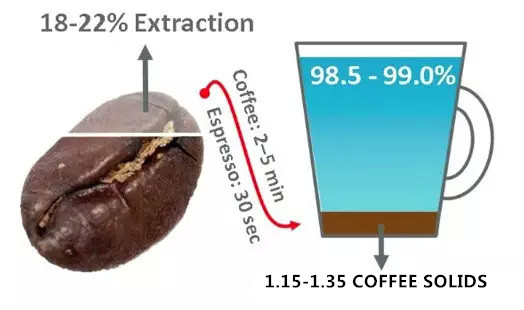
Anatomy and analysis of gold cup extraction theoretical method of gold cup extraction Analysis of knowledge points of gold cup extraction in pressure pot
What is the law of gold cup extraction; how to adjust the extraction rate and coffee concentration; the questions and analyses that baristas often misunderstand. Today, Chongqing Beresta Coffee training School is here to discuss with friends about the gold cup extraction of coffee.

Delicious types, characteristics, brands and production methods of blended coffee
For the exchange of professional baristas, please follow the coffee workshop (Wechat official account cafe_style) spelling coffee spelling: zong he ka fei synonym entry: mixed coffee catalog 1 delicious category 1.1 taste balanced coffee 1.2 bitter coffee 1.3 sour coffee 1.4 flavor coffee 1.5American coffee 1.6full-bodied
Will baristas lose their jobs? What is the water temperature grinding ratio of the standard brewing method of hand-brewed coffee?
In the era of rapid development of artificial intelligence, autopilot has been put on the agenda, and robotic arms have appeared to replace human hands to produce coffee. Qianjie also shared a lot of cooking techniques and shallow analysis before, including standard and scientific cooking methods, as well as on-the-spot analysis of practical problems.

What does the powder-to-water ratio of coffee mean? How to calculate the ratio of coffee powder to water?
Professional coffee knowledge exchange more coffee bean information please follow the coffee workshop (Wechat official account cafe_style) recently, a small friend put a question to the editor, we often say that the golden cup extract

What are the key elements of making good coffee? Introduction to the extraction principle of hand-made Coffee
Coffee extraction is a process of extracting substances from coffee powder by dissolving water through coffee powder, and it is also a scientific principle that can be tested. When the water comes into contact with the coffee powder, most of the water-soluble substances are taken out and fused with each other, and then the various coffee flavors, whether perfect or not, are extracted, and finally a cup of coffee is brewed. Coffee extraction is a complex

SCAA Gold Cup and Coffee Roaster Master Level 1 Certification Course
SCAA Gold Cup and Coffee Roasting Master Level 1 Certification Course June 15-22, 2014 CREMA Coffee Laboratory (Guangzhou) SCAA Gold Cup Master Certification Course Through learning the ratio of coffee and water, concentration, extraction rate and other knowledge, learning and sharing SCAA scientific gold brewing standards, so as to master the gold cup standard for making coffee. Gold Cup Standard is also a deep discussion among friends

How to calculate the extraction rate, concentration and brewing ratio of coffee the effect of gold cup extraction rate on taste and flavor
Professional baristas exchange please pay attention to the coffee workshop (Wechat official account cafe_style) what is the extraction rate, concentration, brewing ratio of the National Coffee Association after World War II, hired Dr. Ernest Eral Lockhart to establish the coffee brewing society, formulated the coffee extraction rate and concentration calculation standards, and based on these two standards set up the "golden cup standard Golden Cup".
Coffee History the Evolution History of Commercial Coffee machines
Gestation period: perfect Steam Theory of Coffee extraction before 1900 in 1818, Dr. Romershausen obtained a patent for an extractor in Prussia. In 1822, the Frenchman Louis Bernard Rabout obtained a patent to obtain a cleaner extract based on the characteristics of oil-absorbing ink paper combined with the design of Dr. Romershausen. 1824, Paris worker